zweikern glossary
Killer Phrase
Definition
What is a killer phrase?
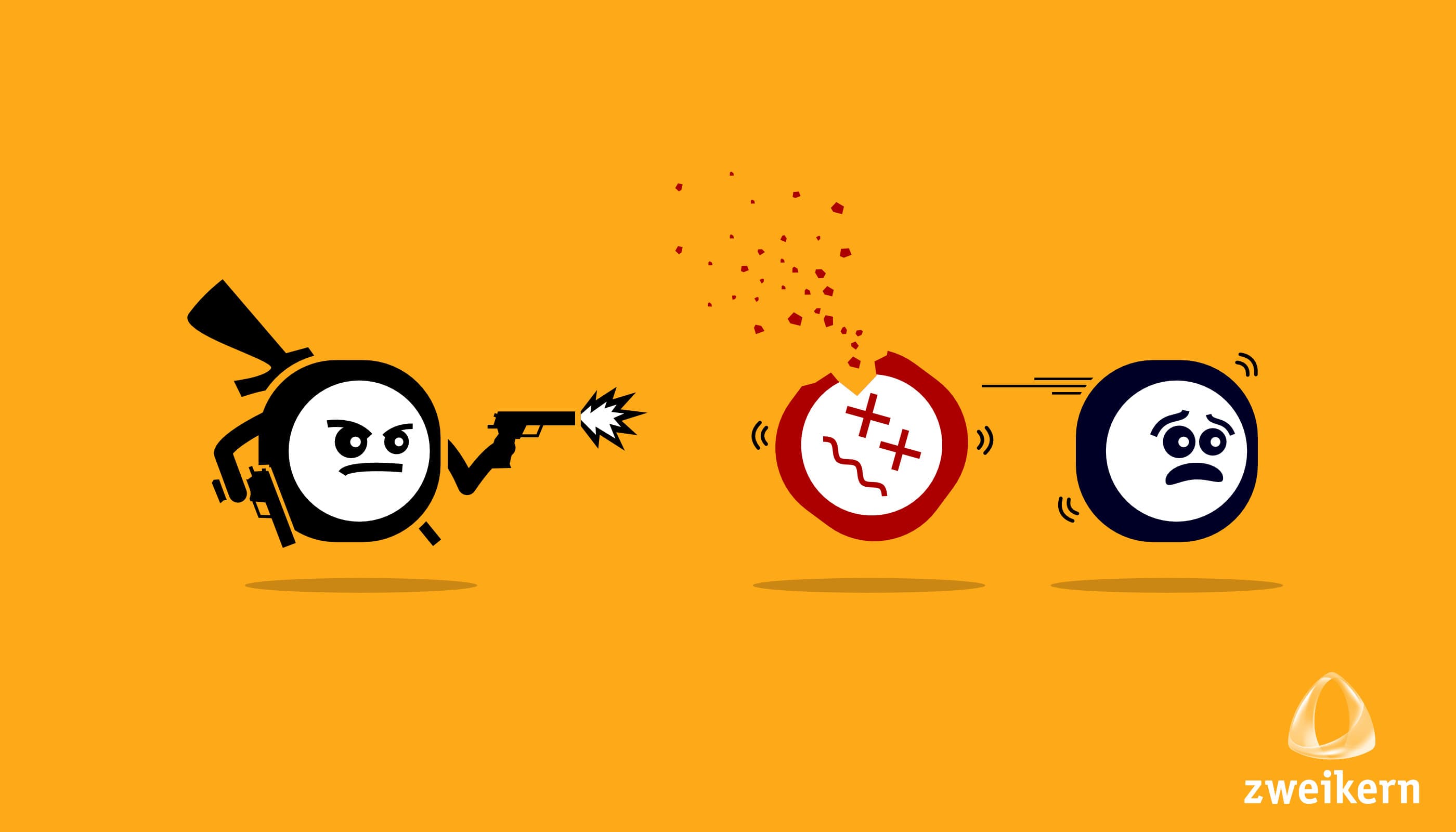
"Killer phrases" are rhetorical expressions or argumentation techniques used in a communication situation to belittle or discredit the interlocutor while suppressing dissent or critical engagement. These phrases often aim to portray the conversation partner in an unfavorable light, discredit them, or dismiss their arguments as irrelevant or improper. Killer phrases are frequently employed in discussions, debates, or conflict situations to strengthen the speaker's position or push the interlocutor into a defensive stance, rather than engaging in rational argumentation.
The use of killer phrases can hinder communication and lead to unproductive conversations as they divert attention from the actual issues and may strain interpersonal relationships. It is therefore advisable to maintain a respectful and rational communication style in conversations to uphold a constructive dialogue culture.
Additional Interesting Facts
Examples of Conversation Stoppers
Some examples of conversation stoppers are:
“We’ve always done it this way.”
“That’s unrealistic.”
“One should still be allowed to say that!”
These phrases can serve to block new ideas, suppress other opinions, or question the credibility of the counterpart.
Psychological Impact
Conversation stoppers can have a significant psychological impact on the victim, creating self-doubt and uncertainty. They can also create an atmosphere of hostility and mistrust, complicating cooperative solutions.
Handling Conversation Stoppers
To effectively deal with conversation stoppers, it’s important to be aware of their nature and their impacts and to respond appropriately. This includes recognizing the conversation stopper, remaining factual, and asking for specific concerns and suggestions.
Defending Against Conversation Stoppers
It’s important not to respond to conversation stoppers with more conversation stoppers as this worsens the communication. Instead, factual arguments and clear communication should be used to clarify misunderstandings and return to a constructive discussion.
The Role of Conversation Stoppers in Society
Conversation stoppers often reflect societal norms and values and can reinforce both the power structures and the cultural differences within a community, a company, or an organization. They can also serve as a mechanism to maintain the status quo by suppressing dissenting opinions and innovative ideas.
Summary
Conversation stoppers are a powerful rhetorical tool often used to belittle others and dominate discussions. However, they can be counterproductive, leading to hostile and unproductive conversations. To promote effective and respectful communication, it’s crucial to recognize conversation stoppers and respond appropriately, maintaining an open and inclusive dialogue culture.

Skills management: From Excel chaos to a living competency map

Career paths in organisations: rethinking career planning

Skills shortage: unlocking talent through internal mobility

Skill based organization: working with skills instead of job profiles

Employee competency profile: Make skills visible and develop talent