Finding talent is expensive. Keeping and developing it is business critical. Many companies invest heavily in recruiting, employer branding and training programmes, yet career planning inside the organisation often remains surprisingly vague. Employees do not really know which career paths exist, whether an expert career or a leadership career is right for them, or which concrete steps they can take.
At the same time, organisations struggle with skill shortages, unfilled key roles and too few internal candidates. This shows very clearly: without clear career paths and a competency based view of development, an organisation loses potential both internally and externally.
Why clear career paths in organisations matter
Career paths are more than nice diagrams in slide decks. They are a core steering instrument for talent management, retention and succession planning.
When an organisation offers transparent, credible career planning, three things happen:
Employees see a future for themselves and are more likely to stay.
Leaders can have concrete development conversations instead of only talking vaguely about “the next step”.
HR can plan succession and staffing instead of constantly recruiting in crisis mode.
If clear career paths are missing, typical patterns appear. People leave because they do not see a way forward internally. Top experts are pushed into management roles where they are neither happy nor effective. Roles are filled with the few people who “somehow fit” instead of with those whose skills really match.
Why traditional career planning falls short
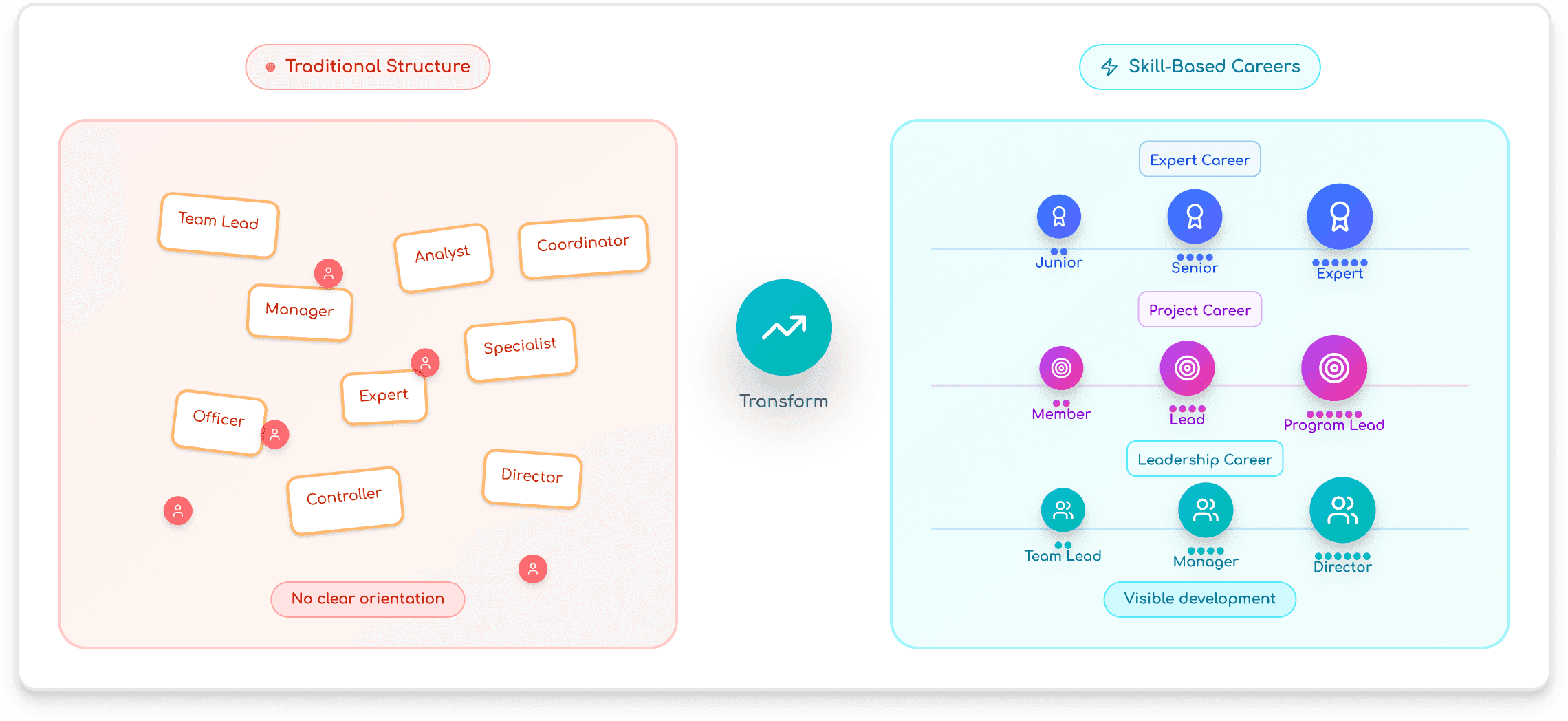
In many organisations, the idea of a linear career still dominates: from junior to senior, then team lead, later head of department. This model fits less and less with the reality of modern work.
Linear career paths as a bottleneck
Traditional career planning often follows a simple logic. Whoever is strong technically will at some point get the next hierarchical level. People become managers not because they want to lead or are good at it, but because it is the only visible career option.
You probably know the consequences from practice:
Overwhelmed managers who would actually prefer to work on content.
Blocked positions because nobody dares to say that the role and the person do not fit.
Employees who leave in order to grow as experts somewhere else.
Career planning without competencies stays abstract
Many companies still rely on job descriptions and generic requirement profiles. Terms like “resilience”, “team spirit” or “strong communication skills” appear everywhere, but hardly help to distinguish roles.
As long as career planning is not clearly linked to concrete competencies, it feels arbitrary. People do not know what exactly they must learn, practise or demonstrate to move into a certain career path.
Three core career paths: expert, project and leadership
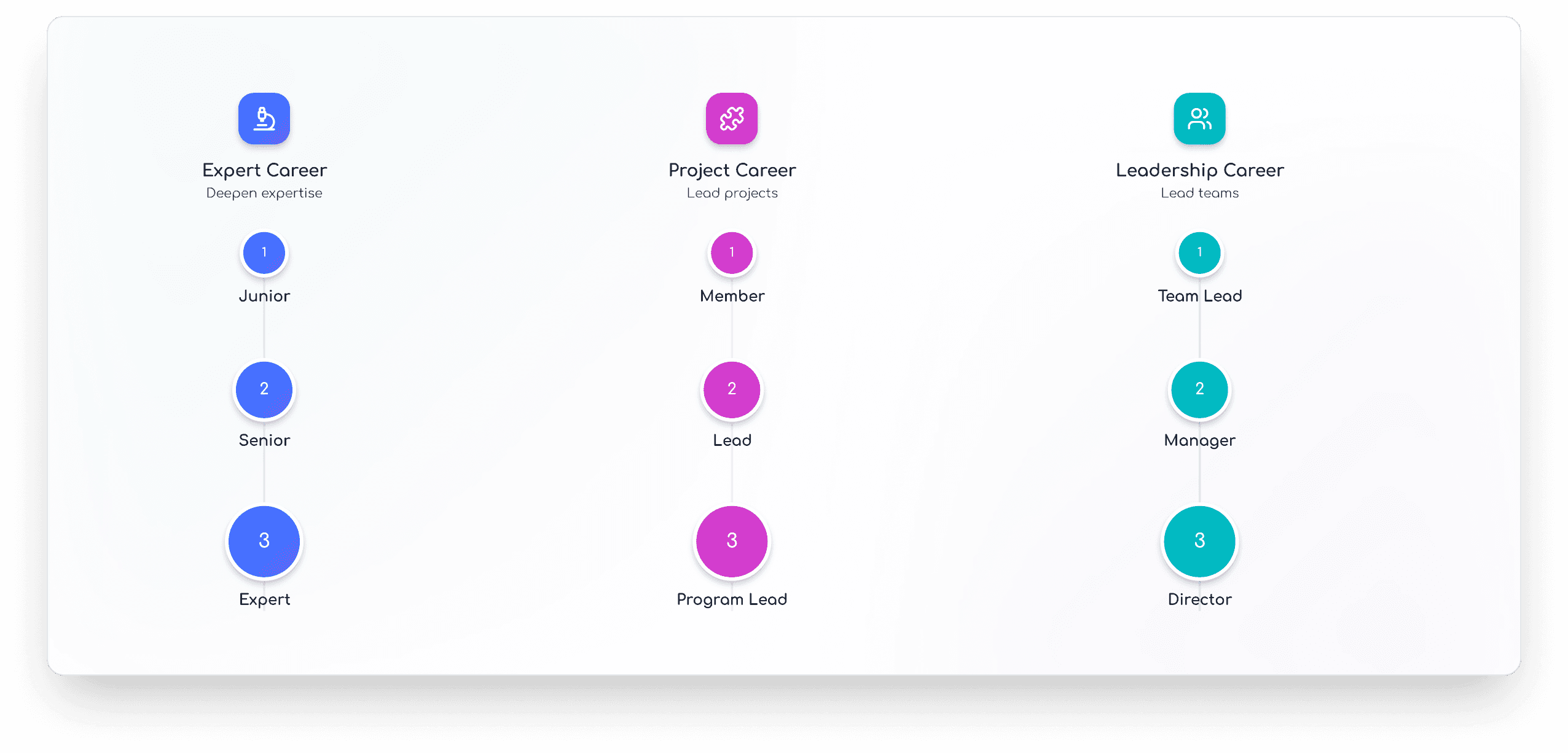
Modern organisations need more than one upward line. A proven model works with three equally valued career paths.
Expert career – depth instead of hierarchy
In an expert career, people build deep specialist knowledge. They take responsibility for complex topics, standards, architecture decisions or key customer segments. Typical roles include principal engineer, lead expert, specialist for a certain topic or senior consultant.
The crucial point: expert careers must be recognised professionally, culturally and financially. Someone who creates as much impact as a manager should not feel “less valuable” just because they do not have direct reports.
Project career – shaping change
The project career is aimed at people who like to work across functions, drive change and coordinate many stakeholders. They do not necessarily lead teams disciplinarily, but they carry responsibility for outcomes, timelines and collaboration, for example as project manager, product owner or programme manager.
Here, competencies in facilitation, prioritisation, conflict resolution and stakeholder management are key.
Leadership career – shaping culture and direction
The leadership career focuses on designing the environment, team culture and strategic direction. Central competencies include:
Developing people and using feedback effectively
Taking decisions, setting priorities and providing orientation
Fostering psychological safety and working constructively with conflict
Good strategic career planning ensures that only people who bring or want to build these competencies move into leadership roles.
Career planning in organisations as a shared process
Career planning only works if organisation and employees share responsibility.
What the organisation has to provide
Companies must create the framework:
Define career paths and career tracks, including typical roles, expectations and competency requirements
Create transparency about which options exist, how to get there and which internal role models already exist
Build structures such as internal postings, talent programmes, development budgets or job rotations
Career planning then becomes part of strategic people development instead of a yearly checkbox in the HR system.
What employees contribute
Employees bring their motivation and life situation into the process:
What type of work gives energy: expert, project oriented or close to leadership?
Which competencies are already present, which should be built?
Which life phases, such as family, care work, further education or a sabbatical, have to be taken into account realistically?
If both sides are honest, a realistic career path emerges that does not collapse at the first conflict.
Competencies as the basis: from titles to skill profiles
For career planning to be robust, organisations need a clear view of competencies: in roles and in people.
Competency profiles for roles
For each key role, the following questions should be answered:
Which tasks truly shape the everyday work?
Which situations are typically challenging?
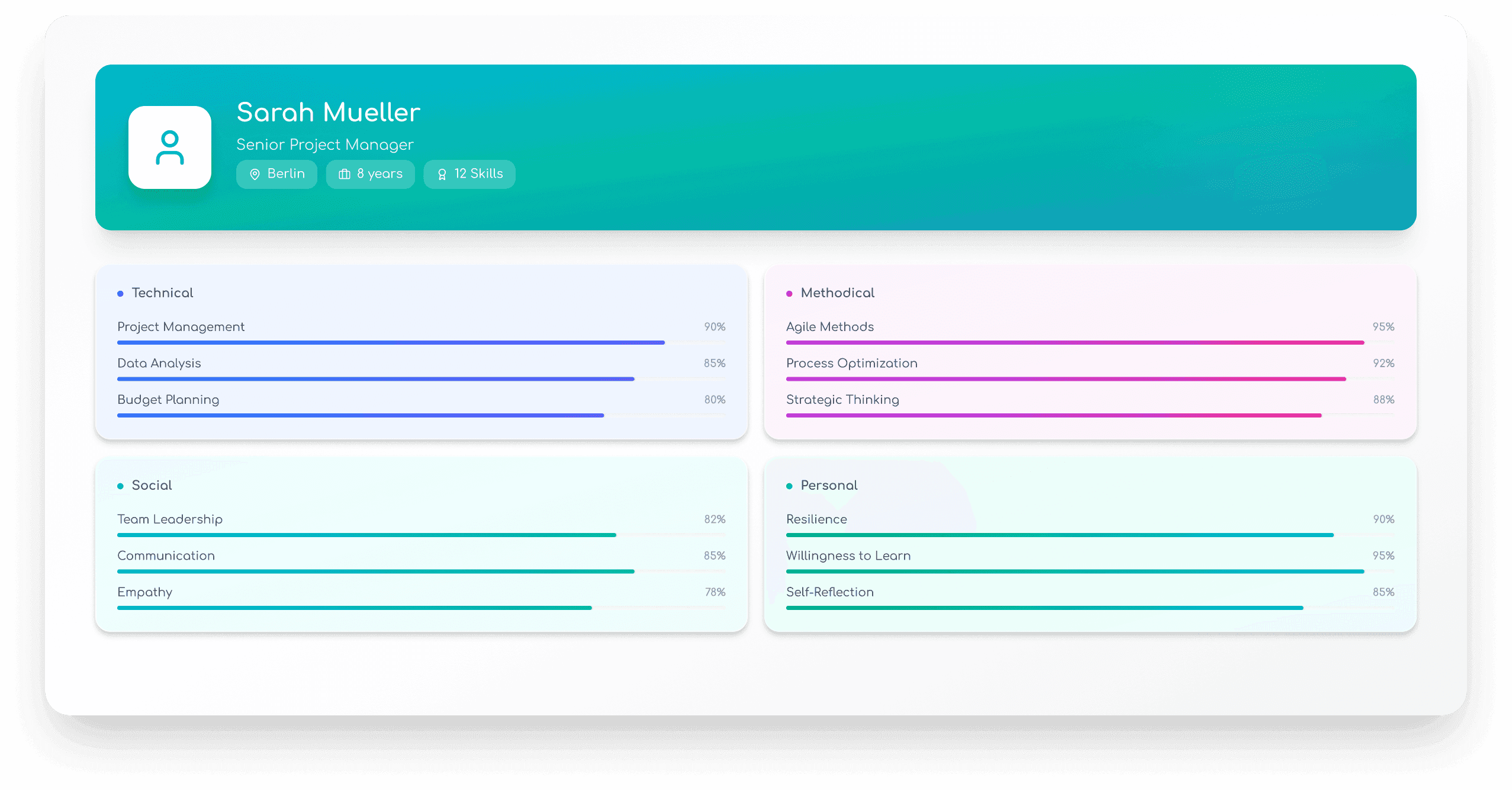
Which technical, methodological and social competencies and which personal resources are critical for success?
The answers form the competency profile of the role. This profile is the basis for clear career paths and for decisions in recruiting, succession planning and internal mobility.
Competency profiles for employees
On the other side stands the person’s competency profile. It answers questions such as:
Which capabilities are demonstrated visibly in day to day work?
How does someone handle pressure, uncertainty and responsibility?
Which strengths become visible in projects, crises or voluntary work?
Modern approaches look beyond education and job history. They include experiences from migration, care work, volunteering, failed ventures or informal leadership. Exactly there we often find competencies that remain invisible on a CV but create huge value in everyday work.
Expert career or leadership career: deciding based on competencies
One of the toughest questions in career planning is: Is an expert career or a leadership career the better path?
This decision should not depend on tenure, sympathy or wish lists. It should be driven by competencies:
Does the person enjoy developing others, taking decisions and holding tension?
Or is their strength to deeply understand complex problems, set standards and create impact through content?
Without clearly described competency profiles, this decision stays fuzzy, with all the risks that brings for the person, the team and the organisation.
How Lianova supports career planning and career paths
This is where Lianova comes in. The platform connects life stories, competencies and role requirements and turns them into usable input for career planning in organisations.
Digital heroes instead of CVs only
Employees and candidates go through guided journeys in Lianova and describe defining moments of their lives. From these stories, so called lifebubbles emerge: condensed events with high relevance for competencies.
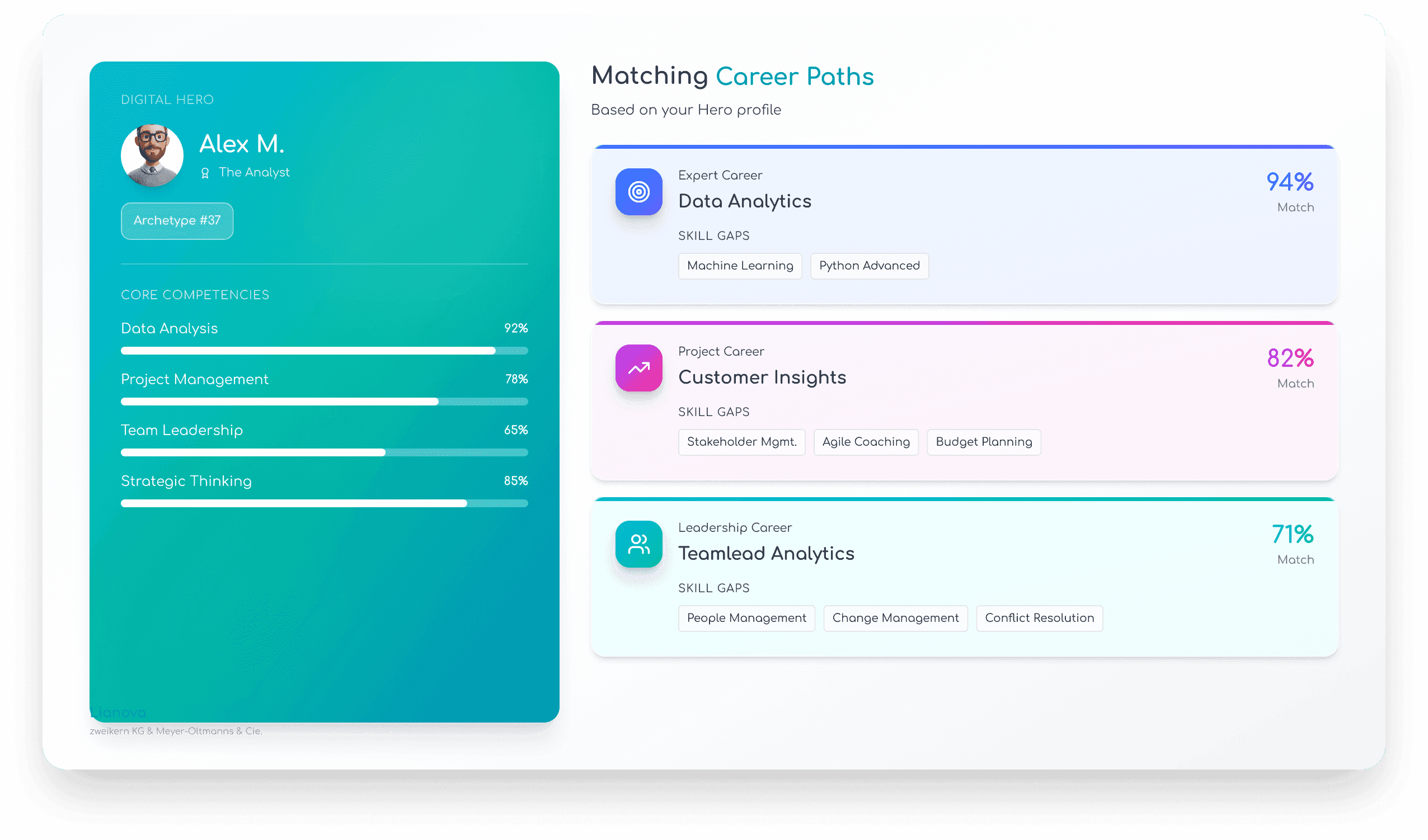
Lianova’s AI assigns these lifebubbles to four strategic competency areas and adds an archetype profile. The result is a digital hero: a living competency profile that shows technical, methodological and social competencies as well as personal resources.
Skill based matching to career paths
Roles, career paths and development stages are stored in Lianova with their competency requirements. The platform can then analyse:
Which digital heroes fit an expert career in a certain domain particularly well
Who brings the potential for a project career with high stakeholder complexity
Which people already show the core competencies for a future leadership career
At the same time, a skill gap analysis shows which development steps are needed to reach a target role. Career planning becomes concrete, transparent and genuinely skill based.
Conclusion: career planning as a strategic lever, not a side product
Career planning in organisations is not a nice add on that you tick off once a year in a performance review. It decides
whether talents stay or leave
whether key roles are filled in time
and whether people end up in roles where they can truly be effective
Organisations that describe career paths, expert careers, project careers and leadership careers clearly and connect them with competency profiles create a framework in which development becomes tangible and plannable.
With digital heroes, lifebubbles and skill based matching, Lianova supports exactly this step. Career decisions become less random and more competency driven. People find roles in which they can use their strengths, and organisations secure the capabilities they really need for the future.
FAQ
What are career paths in an organisation?
Career paths describe structured directions in which employees can develop, for example as experts, in project roles or in leadership. They connect roles, competencies and development stages and make it transparent which options exist and which steps are needed to reach them.
Why are clear career paths so important for companies?
Clear career paths give employees orientation and increase retention, because people see a future for themselves in the organisation. At the same time, leadership and HR can plan succession and staffing better and reduce the pressure on external recruiting, since internal talent becomes more visible.
What is the difference between an expert career and a leadership career?
In an expert career, people deepen their specialist knowledge and take responsibility for complex topics, standards or key customers. In a leadership career, the focus is on leading people, designing frameworks and culture, setting priorities and providing orientation. Both paths should be equally valued and linked to clear competency requirements.
How do competency profiles support career planning?
Competency profiles describe which technical, methodological and social skills and which personal resources a role requires and which a person brings. They make strengths and development areas visible and enable skill based decisions about which career path fits best and which learning steps are needed for the next move.
How does Lianova help with career planning in organisations?
Lianova turns life stories and work experiences into digital hero profiles that map four strategic competency areas and an archetype. These profiles are matched with role and career path requirements so that companies can see which employees fit expert, project or leadership careers, where skill gaps exist and how to design development paths in a data driven way.
Can clear career paths help reduce the impact of skill shortages?
Yes. When organisations understand their internal competencies and offer transparent career paths, they can develop and retain existing talent more effectively and use internal mobility as an alternative to constant external hiring. This reduces the effects of skill shortages and makes better use of the workforce that is already on board.