Finding skilled people is hard enough. Keeping them and developing them in a targeted way is even more demanding. Across many industries, companies in Germany and beyond feel the pressure of the skills shortage – vacancies stay open for months, projects are delayed, teams work permanently at their limit. At the same time there are people with exactly the right capabilities who remain unseen: inside the organisation, in other sectors, in non-linear life paths.
This is where a different perspective on the skills shortage starts. Instead of only doing “more recruiting”, it pays off to focus on the actual skills in the organisation and in the labour market – and to deliberately build internal mobility and modern talent matching. With Lianova and its digital heroes, both perspectives can be combined.
Why the skills shortage is more than a lack of applications
When people talk about a skills shortage, they often focus on empty inboxes and too few applications. Sometimes it even sounds as if “nobody wants to work anymore”. That explanation is too narrow.
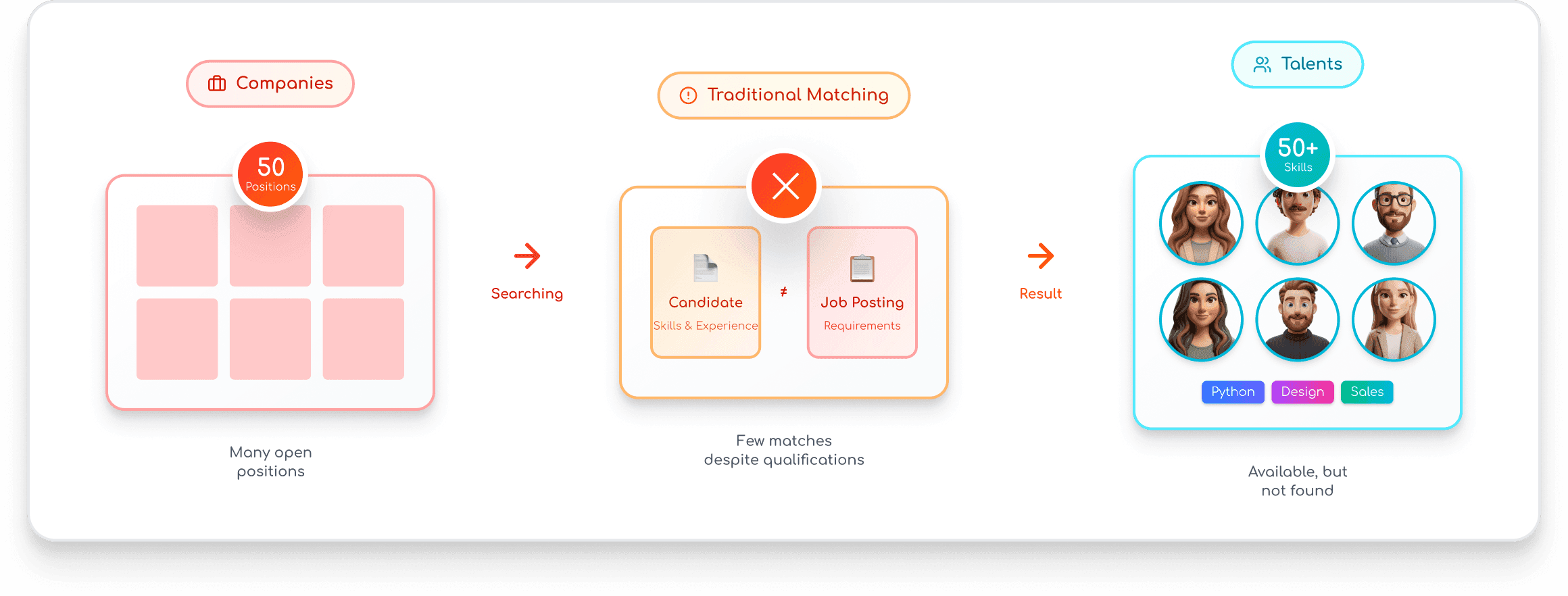
The bottleneck is made up of several factors: demographic change, regional imbalances, qualification gaps – and very narrow ideas of what a “suitable profile” looks like. Many companies search for highly specific combinations of experience, industry and titles. At the same time there are people with strong learning ability, broad experience and transferable skills who fall through the cracks of those search patterns.
Seen this way, the skills shortage is not only a question of quantity. It is also a matching problem between real work, role requirements and the capabilities that already exist in the workforce.
Classic responses and their limits
Most organisations react to the skills shortage with instruments they already know. That is understandable – but these measures rarely change the underlying structure of the problem.
More recruiting of the same profiles
Job ads are pushed on more channels, active sourcing is expanded, external agencies are hired. All of that can help in the short term. But in the end, everyone is still chasing the same scarce profiles.
If a company looks only for people who already tick every box of the target profile, the bottleneck is simply moved around the market – it does not disappear.
Employer branding without structural change
A strong employer brand is valuable. Yet it only brings lasting relief if the organisation itself keeps pace: with clear career paths, transparent development opportunities and a fair internal job market.
If these foundations are missing, employer branding mainly increases the inflow at the top of the funnel and at some point also the outflow. People join, realise that development is unclear, and leave again. The skills shortage then reappears one step later.
Rethinking the skills shortage as a skills problem
A different approach emerges when companies place competencies – not job titles – at the centre of their thinking.
Instead of asking:
“Which position is vacant and who has the right title?”
the key questions become:
“Which tasks must we reliably deliver in the coming years – and which skills do we need for that?”
Once work and skills are clearly described, the view widens. It becomes easier to recognise that the labour market is not empty, it is badly mapped.
Skilled people are there but not visible
Many skilled people are not “missing”; they simply do not show up in standard searches:
Employees whose current job titles say little about what they actually do well
Career changers who bring strong skills from other industries
People with non-linear biographies whose experience does not fit into classic CV templates
If organisations gain a sharper picture of capabilities and strengths, the perceived skills shortage shrinks. The central question shifts from “Where do we find new people?” to “How do we use the people we already have – and whom are we overlooking in recruiting?”
Internal mobility: finding skilled people inside your organisation
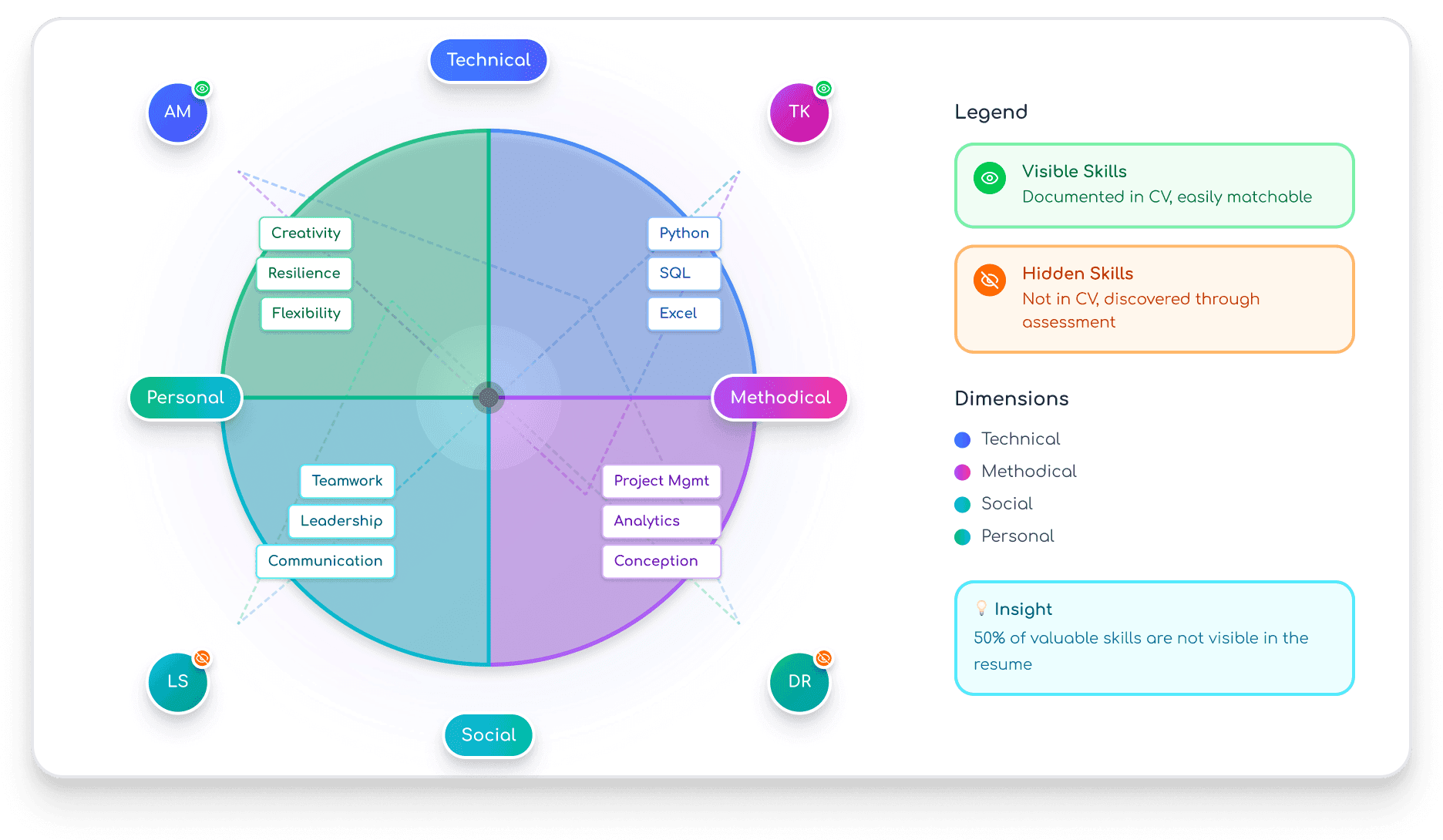
One of the most powerful levers against the skills shortage is internal mobility. Once a company knows which competencies exist where, roles, projects and people can be combined in new ways.
Redeployment as an alternative to layoffs
In phases of restructuring and cost pressure, organisations often cut jobs in one area while desperately looking for talent in another. This leads to double loss: valuable knowledge leaves the company and the recruiting team has to fill positions on a tight market.
A structured redeployment process reverses the order of decisions. Before redundancies are defined or external hiring starts, it is checked which existing employees could move into other roles based on their skill set and learning potential.
This keeps critical expertise in the company and offers affected employees real perspectives instead of pure downsizing programmes.
Transparent career paths against quiet quitting
Internal mobility only works if people can see which career paths exist and which skills are relevant for them.
Clear role profiles and competency profiles make it easier to understand which development steps are realistic and worthwhile. That increases retention – one of the central success factors in times of skills shortage. Where people experience that their strengths are recognised and development is possible, the risk of quiet quitting and churn drops.
Lianova’s digital heroes: making competencies visible
This is where Lianova comes in. The platform is designed to reveal hidden talent and to address the skills shortage from two sides at once: inside the organisation and in recruiting.
Life paths instead of CVs
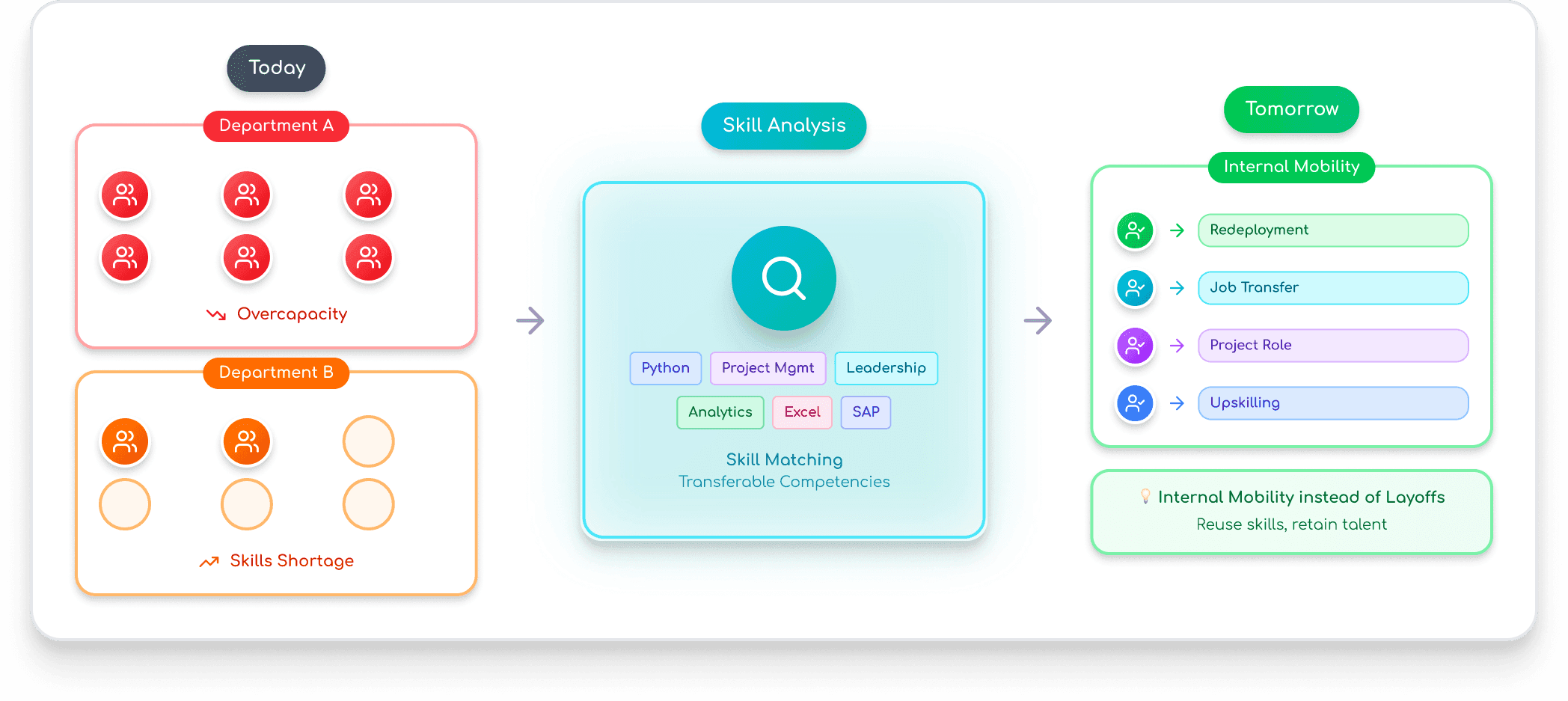
In Lianova, employees and candidates go through guided journeys and describe pivotal moments in their working and personal lives. From these narratives, so-called lifebubbles are created: condensed events with high relevance for competencies – for example migration experience, care work, volunteering, failed ventures or responsibility in crisis situations.
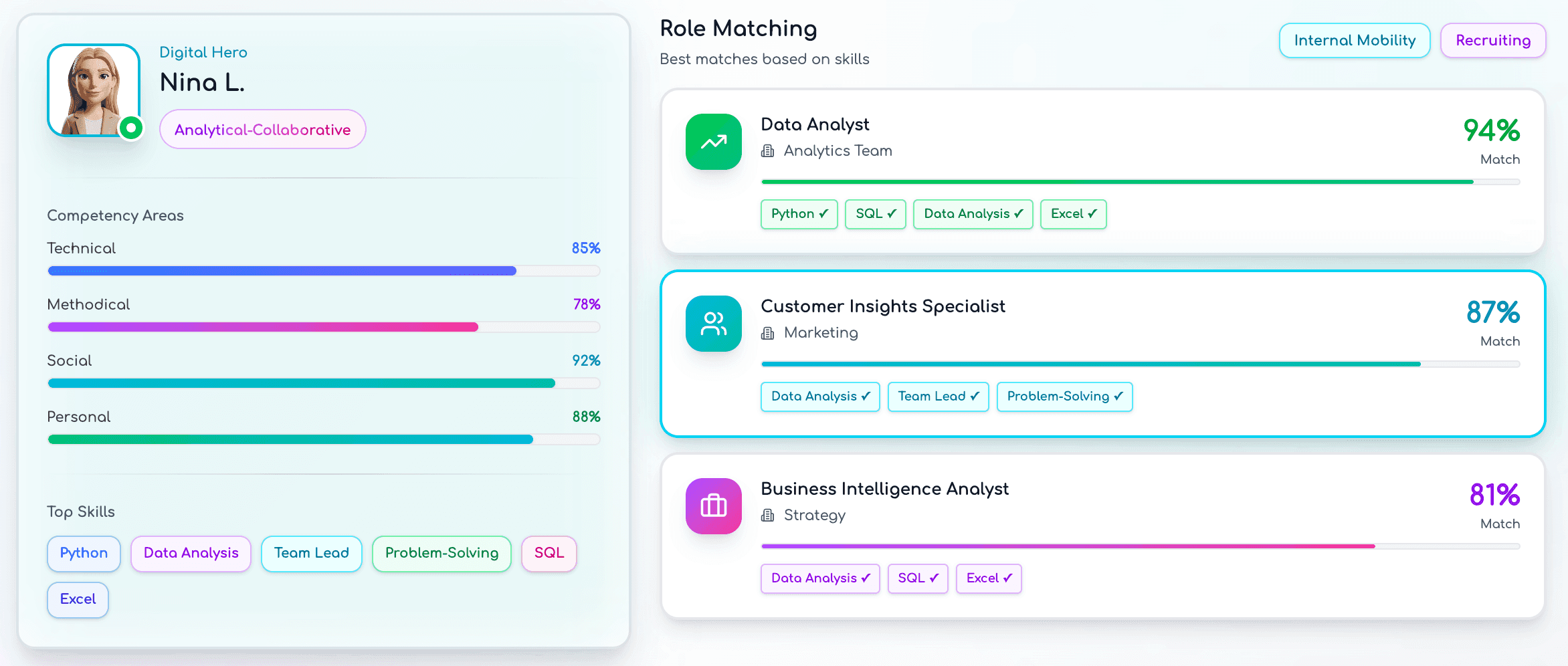
Lianova’s AI assigns these lifebubbles to four strategic competence areas and adds an archetype profile. The result is a digital hero: a profile that maps professional, methodological and social competencies as well as personal resources in a structured way.
Lianova in internal mobility
Based on hero profiles, Lianova can analyse which internal heroes fit critical roles, projects or value streams, where skill gaps could be closed with targeted development and which people are particularly suitable for redeployment. Internal mobility becomes data-driven instead of purely anecdotal.
Lianova in recruiting: digital heroes instead of CV filters
In external recruiting, Lianova offers a new angle on the skills shortage. Instead of evaluating candidates primarily on formal degrees, industry labels or CV gaps, the platform places behaviour and capabilities at the centre.
That makes talent visible which would be filtered out in classic processes. For organisations this means a broader and more diverse pool of suitable candidates – an essential advantage in a tight labour market.
What companies can do now
Addressing the skills shortage does not have to be a desperate call for political solutions. Organisations can take concrete steps themselves – especially if they treat skills and internal mobility as strategic topics rather than side projects.
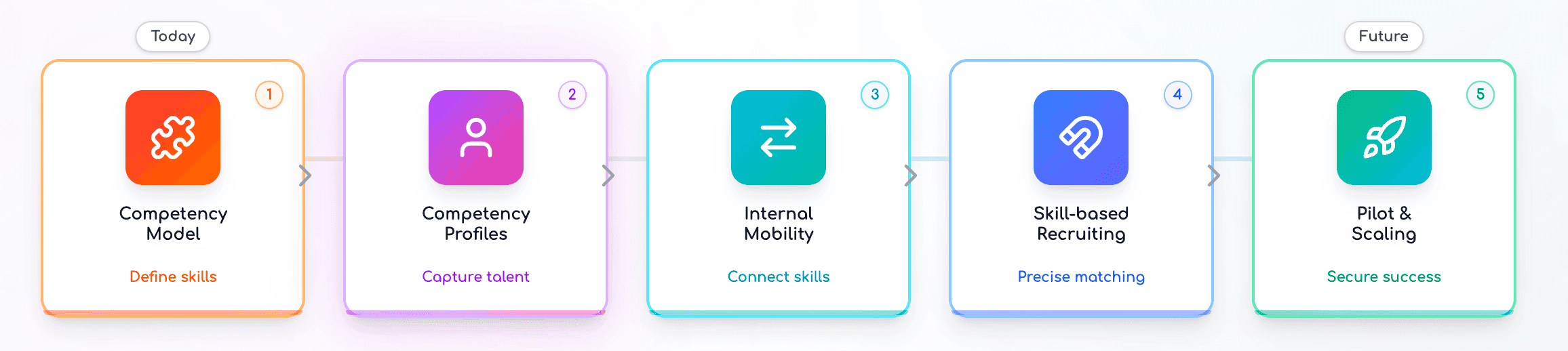
1. Define a competence model
First, create a shared language for competencies: professional, methodological, social and personal. This model becomes the foundation for competency profiles, skill inventories and role descriptions.
2. Build competency profiles
For key roles and key people, develop competency profiles that go beyond checklists. Combine questionnaires with life paths, project feedback and real work examples to get a richer picture of strengths.
3. Structure internal mobility
Align internal postings, project staffing, succession planning and redeployment with skills. Make sure internal candidates are systematically considered before external hiring starts.
4. Shift recruiting to skills
Rewrite job ads and selection processes so they start from tasks and capability requirements, not only from titles and years in a specific industry. Use digital heroes to identify potential beyond standard CV patterns.
5. Run a focused pilot with Lianova
Instead of redesigning all of talent management at once, start with a pilot in an area with acute skills pressure. There you can test digital heroes, skill mapping and internal matching, generate quick wins and build a solid business case for scaling.
Conclusion: facing the skills shortage with a different lens
The skills shortage is a reality – in Germany and in many European labour markets. But it is not an unavoidable fate. Organisations that consistently focus on skills, competency profiles and internal mobility create room to manoeuvre:
They use existing specialists more effectively.
They discover talent that a CV alone would never reveal.
They connect redeployment, learning and recruiting into a coherent system.
With digital heroes, lifebubbles and skill-based matching, Lianova offers a practical way to make this shift. The skills shortage will not simply disappear – but it becomes manageable. And companies can find and retain the people they truly need for their future.
FAQ
Why is the skills shortage more than just a lack of applications?
The skills shortage is not only about too few applications, but also about how companies search. Many organisations look for very narrow profiles and overlook people with transferable capabilities and high learning agility. The bottleneck is therefore also a matching problem between real work, role requirements and the skills that are already available.
How can internal mobility help to reduce the skills shortage?
Internal mobility makes visible which skills already exist in the organisation and where people could move into new roles or projects. Instead of cutting jobs in one area and hiring expensively in another, companies can redeploy employees whose competencies fit elsewhere. This keeps critical know-how in house and closes gaps faster.
What role do skills and competency profiles play in tackling the skills shortage?
Skills and competency profiles create transparency about what people can actually do. They show which capabilities are critical for key value streams, who already brings them and where realistic development paths exist. Based on this, workforce planning, learning, internal mobility and recruiting can be aligned to skills instead of job titles and gut feeling.
What are Lianova’s digital heroes?
Digital heroes are competency profiles built from real life and work experiences. In guided journeys, people describe key events in their lives. Lianova’s AI turns these "lifebubbles" into structured profiles across four competence areas plus an archetype. The result is a hero profile that captures fachliche, methodische, soziale and personal resources far more precisely than a traditional CV.
How does Lianova support companies with the skills shortage in recruiting?
In recruiting, Lianova shifts the focus from formal titles, industries and CV gaps to behaviour and capabilities. Digital hero profiles are matched against role requirements, so candidates with non-linear careers or cross-industry experience become visible. This enlarges the pool of suitable candidates and helps fill roles that remain vacant in classic processes.
How can organisations practically get started with Lianova to address the skills shortage?
A pragmatic start is a pilot in a business area with high skills pressure. There, a common competence model and hero profiles are created, internal matches are tested and recruiting is supported with digital heroes. From the pilot results, companies can derive business cases for internal mobility, redeployment and skill-based recruiting and then scale the approach step by step.