Knowledge transfer does not only succeed on the last working day before retirement. Companies need to clarify early which experiential knowledge is critical, who needs it, and through which routines it will be passed on. A combination of clean documentation, guided practice, mentoring, and clear responsibilities in leadership and HR is especially effective.
When Experience Is Suddenly Missing
Demographic change is noticeably reshaping the labor market. Many organizations employ more experienced specialists while fewer young workers are entering the workforce. This is not only a matter of recruiting or age structure. It affects teams’ ability to work day to day.
When a long-standing colleague leaves, rarely only their job description leaves with them. Customer histories, informal shortcuts, specialized technical knowledge, risk assessments, or a feel for which decision works in which situation often disappear too. Anyone who wants to explore the consequences of aging workforces in more depth will find useful context in the article on demographic change in the workplace.
Forecasts such as those from the Demographie Netzwerk have pointed in the same direction for years: the share of younger people of working age is decreasing, while older employees make up a large part of the workforce. For companies, this means knowledge should not be secured at some point in the future, but while it is still being used.
Which Types of Knowledge Get Lost
Not all knowledge can be transferred equally well. Some information is already in manuals, ticketing systems, or process descriptions. Other knowledge is embedded in decisions, routines, relationships, and experience. This second group in particular is often underestimated during handovers.
For leaders and HR, the central question is therefore not: “Where do we store everything?” Rather: “Which knowledge would be expensive, slow, or risky to rebuild?” This distinction makes knowledge management practical.
Explicit Knowledge Needs Maintenance
Explicit knowledge is visible and documentable. It includes work instructions, checklists, plans, reports, drawings, process documents, templates, or technical specifications. A company wiki, a well-maintained intranet, or a structured knowledge base can achieve a great deal here.
The catch: documentation ages quickly. A wiki only helps if teams use it in everyday work, update it, and take responsibility for it. Otherwise, it becomes an archive that new employees may find but do not trust.
Every critical instruction needs a responsible person.
Documents should show when they were last reviewed.
New employees should be allowed to flag outdated content directly.
Process knowledge belongs where the work actually happens.
Tacit Knowledge Needs Proximity
Tacit knowledge is harder to grasp. It develops over years: through mistakes, customer contact, conflicts, improvised solutions, and repeated decisions made under uncertainty. It is the knowledge that experienced employees often describe with sentences like: “You just notice it at some point.”
This experiential knowledge cannot be fully squeezed into documents. It needs observation, working together, follow-up questions, and reflection. Anyone who only asks for manuals overlooks the part of the iceberg below the surface.
Knowledge Transfer Works as a Work Routine
Knowledge transfer is often started too late: shortly before retirement, resignation, or a job change. That creates pressure, and important details are forgotten. A better approach is an ongoing process that regularly makes critical knowledge visible and distributes it deliberately.
This does not require a large campaign. What matters is that organizations know which roles, skills, and relationships are critical to operations. A useful starting point is the question: Which tasks could we not continue properly tomorrow if a certain person were absent?
Especially in key roles, it is worth taking a close look at impending knowledge loss in the company. This shows why knowledge is often only recognized as a risk once it has already gone.
Start with Risk-Critical Roles
Not every position requires the same transfer effort. Prioritize where experience is difficult to replace: special machinery, long-standing customer relationships, regulatory requirements, evolved IT landscapes, or complex internal interfaces.
A simple risk check helps manage the effort. HR, the manager, and the knowledge holder should jointly define which know-how needs to be documented, observed, or trained.
Which decisions does the person make without formal instructions?
Which contacts, histories, or special cases are known only to them?
Which mistakes would new colleagues probably repeat?
Which tasks require practical guidance instead of written explanation?
Who should at least share responsibility for this knowledge in the future?
Formats That Work in Everyday Practice
An internal wiki is a good start, but not a complete concept. Internal company knowledge is more likely to be retained when several formats work together: documenting, demonstrating, trying out, reflecting, and updating.
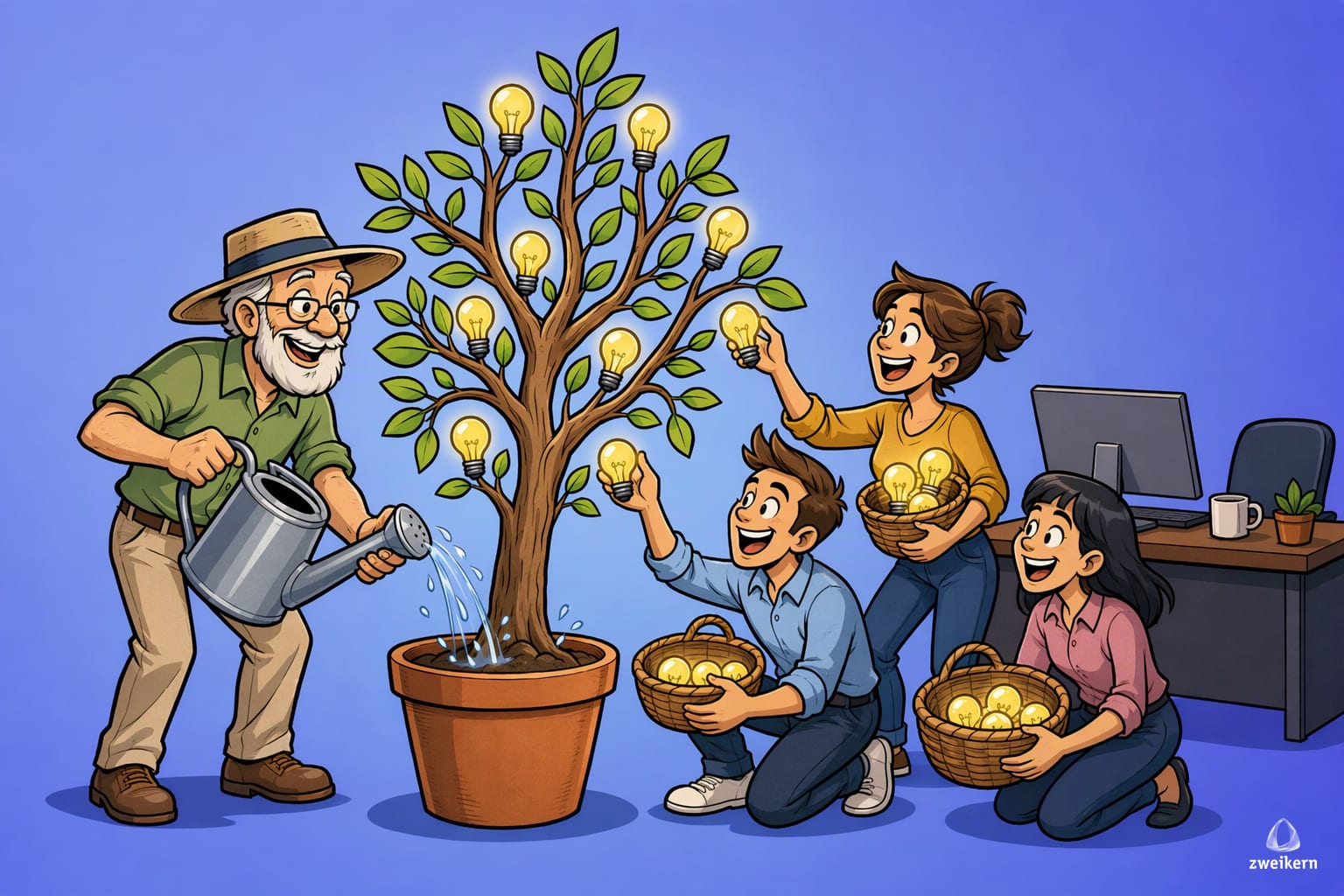
Tandems of experienced and younger employees have proven effective. New colleagues accompany customer appointments, project meetings, or critical work steps and gradually take on their own tasks. In this way, knowledge is not only explained but experienced.
Mentoring can also help when it is clearly aligned with skills, handover goals, and specific situations. It works best when both sides define which tasks, contacts, routines, or decision criteria should be transferred and then revisit progress regularly.
Digital skills profiles can also make visible who holds which knowledge and where succession or backup coverage is missing. For organizations that want to connect knowledge with roles, skills, and projects, the use case knowledge transfer with digital twins can be a possible next step.
Shadowing: Younger employees accompany experienced colleagues during real tasks.
Reverse mentoring: Younger employees contribute digital routines, while experienced employees pass on context and judgment.
After-action reviews: After projects, teams discuss what worked and what should be done differently next time.
Handover interviews: Knowledge holders explain special cases, decision logic, and typical pitfalls.
Learning tasks: Successors take on partial tasks under observation instead of merely listening.
What Leadership and HR Should Change
Knowledge transfer rarely fails because of a lack of awareness. It fails because of calendars, unclear ownership, and the assumption that experienced employees will pass on their knowledge on the side. Leaders therefore need to create time for it and treat transfer work as part of the role.
HR can structure the process: identify critical roles, initiate handover plans, support mentoring formats, and check whether new employees are actually becoming capable of working independently. Leadership ensures that knowledge holders are not penalized for making themselves replaceable, but receive recognition for developing others.
Culture is also important. Those who hide mistakes do not document learning moments. Those who gain status through exclusive knowledge share less. An organization that wants to secure experience must speak openly about which knowledge is currently too dependent on individuals.
Make handover goals measurable, for example through tasks taken over rather than documents filed.
Plan transfer time before the final quarter of employment.
Connect onboarding with real projects, not only with training materials.
Regularly check whether backups can truly perform critical tasks.
Reward knowledge sharing as a contribution to team performance.
What Remains
Knowledge has no retirement age, but organizations need to make it movable in good time. The best knowledge holder is not valuable because only they can solve a task. They become more valuable when others learn faster through them.
Good knowledge transfer combines documentation with shared practice. It secures explicit knowledge, makes tacit experiential knowledge visible, and reduces dependence on individual people. For companies, this becomes a tangible advantage: less friction during succession, faster onboarding, and greater certainty when experienced specialists leave.
If you want to assess where critical knowledge sits in your organization, start with three roles whose absence would be felt immediately. This often creates more clarity than a large knowledge management project without priorities.